S&P Global Commodity Insights Report Highlights Dramatic Decline in Last Two Years
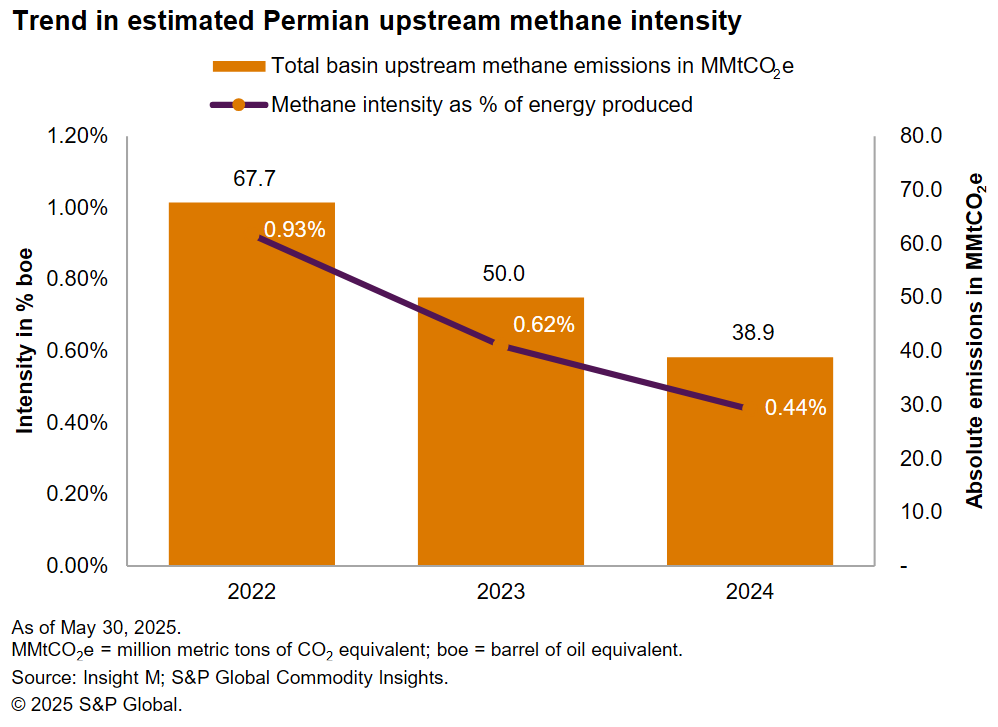
Oil and natural gas operators in the Permian Basin reduced their operations’ methane intensity by more than 50% in the past two years, according to new data from S&P Global Commodity Insights. This dramatic emissions reduction comes amid soaring production from one of the most prolific basins from the world, responsible for nearly half of U.S. oil production and almost a third of U.S. natural gas production.
The report attributes this astounding achievement to industry’s proactive adoption of advanced technologies and operational improvements including modernized equipment, enhanced operational practices, and strategic uses of artificial intelligence.
Following the release of this data, the Texas Methane & Flaring Coalition issued the following statement:
“Our members have consistently demonstrated a sincere and deep commitment to reducing the level of methane intensity levels—efforts that are clearly working. Since the Coalition’s inception in 2019, operators have made significant progress in ending the practice of routine flaring, and as this new data confirms, achieved extraordinary methane intensity reduction alongside record production levels.”
Statements from other members of the Texas Methane & Flaring Coalition:
“At Chevron, our goal is simple – keep methane in the pipe. To pursue this, we are using detection and direct measurement technology to improve our understanding of Chevron’s emissions. Industry’s efforts to reduce methane emissions mean more natural gas is available to heat homes, generate power and meet the many other needs of modern society.” – Chevron
“We welcome the report’s validation of our efforts and those of our entire industry. For our part, ExxonMobil has been coupling hard work on the ground with the development and deployment of cutting-edge technologies. We’re proud to have eliminated routine flaring in our heritage Permian assets and are on track to achieve zero routine flaring across all our operated upstream assets by 2030. We are also ‘aiming for zero’ on methane emissions and are well on our way.” – ExxonMobil
“Reducing emissions is good for the environment and our business. Our Emissions Technology team plays a key role in our emissions reduction strategy, using tools like satellites, aircraft, drones, ground-based sensors, and operations data to monitor emissions and respond quickly. We’re committed to investing in technologies that support emissions reduction and drive operational excellence across our footprint, including the Permian Basin. Oxy remains ahead of schedule in our commitment to the World Bank’s Zero Routine Flaring by 2030 Initiative, having again sustained zero routine flaring across U.S. oil and gas operations in 2024. Globally, we decreased routine flaring in our oil and gas operations by 80% compared to Oxy’s 2020 baseline.” – Occidental
Industry led partnerships like the Texas Methane & Flaring Coalition and Environmental Partnership have been essential in bringing operators together in a collaborative manner with the shared goal of eliminating routine flaring by 2030 through identifying and advocating for best practices.
The members of the Texas Methane & Flaring Coalition are committed to continued progress in reducing flaring and methane emissions, while meeting ever-growing demand for reliable oil and natural gas across the globe.